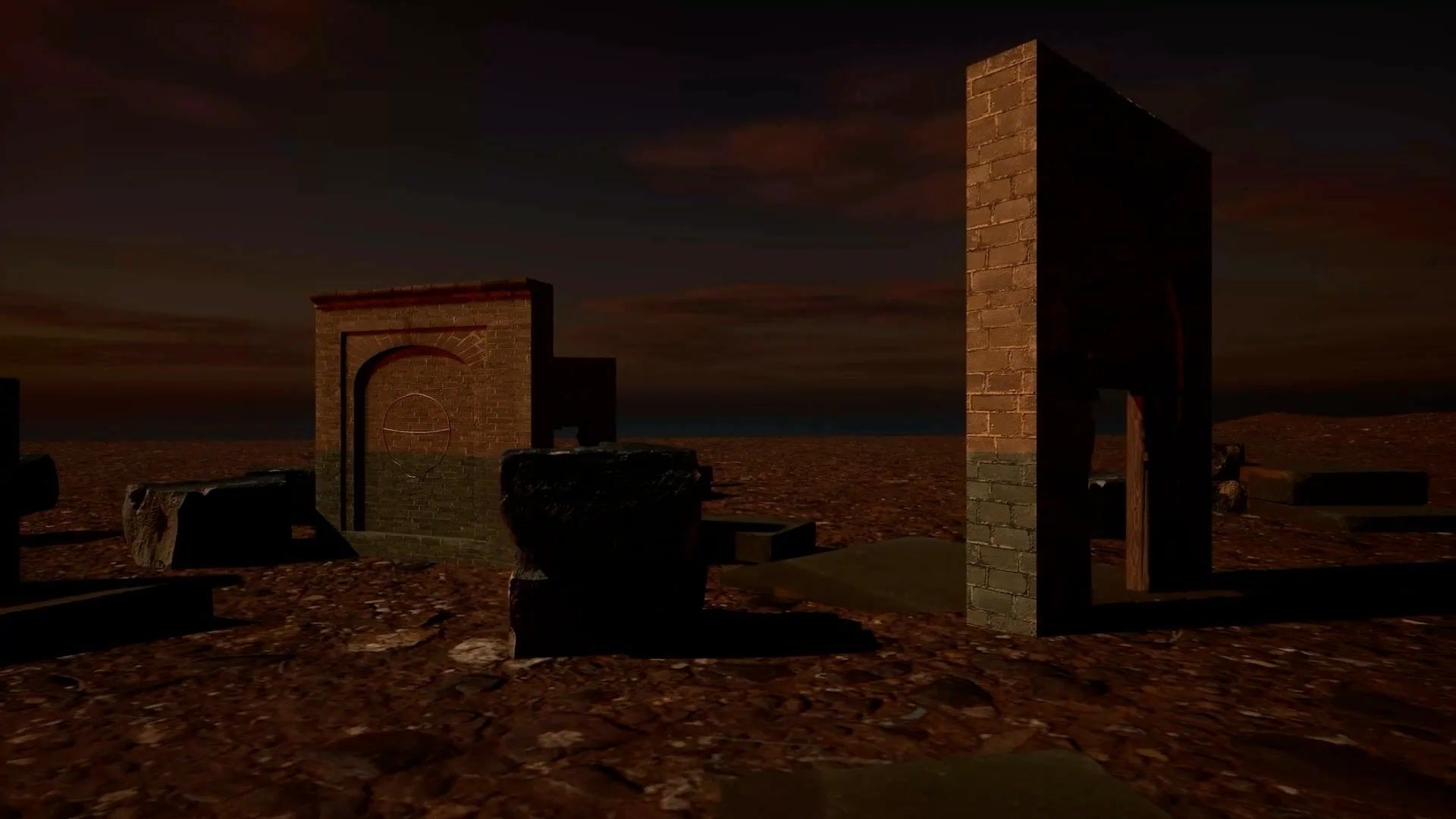
Deborah Tchoudjinoff’s moving image installation work The City of Gold (with sound in collaboration with Joe Farley) and The City of Coal consider vast, more-than-human, geological timescales with continents once again becoming one. Research about historical supercontinents gives space to think about the formation of natural resources in relation to shifting tectonics. As each past supercontinent drifted, erupted, collided and separated, they also generated the minerals that give shape to the objects we make and use today. If one understands Earth as shifting, moving matter, it is also possible to speculate upon alternative realities and futures.
Currently, there are four possible supercontinents that will form in the distant future: Novopangea, Pangea Ultima, Aurica, and Amasia. In the case of Amasia, the tectonic plates will join to combine the Americas while migrating northward. This new landmass will collide with Europe and Asia all the while moving toward the North Pole. Starting out as a short fictional narrative, Tchoudjinoff began to imagine a world of cities in a future Amasia. These fictional cities are named after minerals that are highly sought after: rare earths, copper, uranium, gold, and coal, thereby hinting at an Earth depleted of the resources we rely on. The City of Gold and The City of Coal (showing for the first time in Tokyo) constitute two of the five imagined cities. Their exhibition prompts questions about what a world where certain natural resources no longer exist would look like and who would be its inhabitants.
The City of Gold
Deborah Tchoudjinoff・2025